
Five Ways to Verify Where Emergency Resources Come From and How Current They Are
Transparency in resource directories is critical for ensuring that individuals in Kentucky and Indiana receive accurate, up-to-date assistance. No One Left Outside builds its platform on the principle that useful information requires honest limits and clear sourcing. By understanding how to verify the origin and recency of data, users can make informed decisions when navigating complex social service systems. This guide outlines five practical methods to assess the reliability of the resources you encounter.
1. Check for Explicit Source Labels and Check Dates
Look for a named source and a specific date next to every fact. A reliable directory will not just list a phone number; it will identify the agency that owns that number and the date the information was last verified. For example, No One Left Outside displays check dates on its resource pages to show exactly when a listing was reviewed. If a directory does not provide a source or a date, the information should be treated as unverified until you confirm it directly with the provider.
2. Distinguish Between Official Sources and Directory Guidance
Identify whether the information comes from the agency itself or the directory's interpretation. Official sources are published by the organization that runs the service, meaning their page controls the final rules if there is a discrepancy. Directory guidance, on the other hand, is a plain-language suggestion that helps you navigate the process but does not decide eligibility. No One Left Outside clearly separates these two types of information in its forms library, ensuring users know which details are binding and which are helpful tips.
3. Verify the Specific Program, Not Just the Organization
Confirm that the rules apply to the exact program you are applying for. One organization may run several different programs, each with its own eligibility rules, hours, and application steps. Using information from one program for another can lead to denied applications or wasted trips. No One Left Outside lists programs separately when a single organization runs multiple services, helping you find the specific rules for the aid you need rather than general organizational information.
4. Look for Honest Labels on Missing Information
Trust directories that explicitly state when they do not know a detail. A high-quality resource directory will label missing information as "UNKNOWN" rather than guessing or leaving a blank space that implies the data is complete. Missing information does not mean a program is closed or cannot help; it simply means the directory has not yet verified that specific detail. No One Left Outside uses this labeling system to maintain trust, ensuring that users are not misled by incomplete data.
5. Use a Review Queue to Report Changes
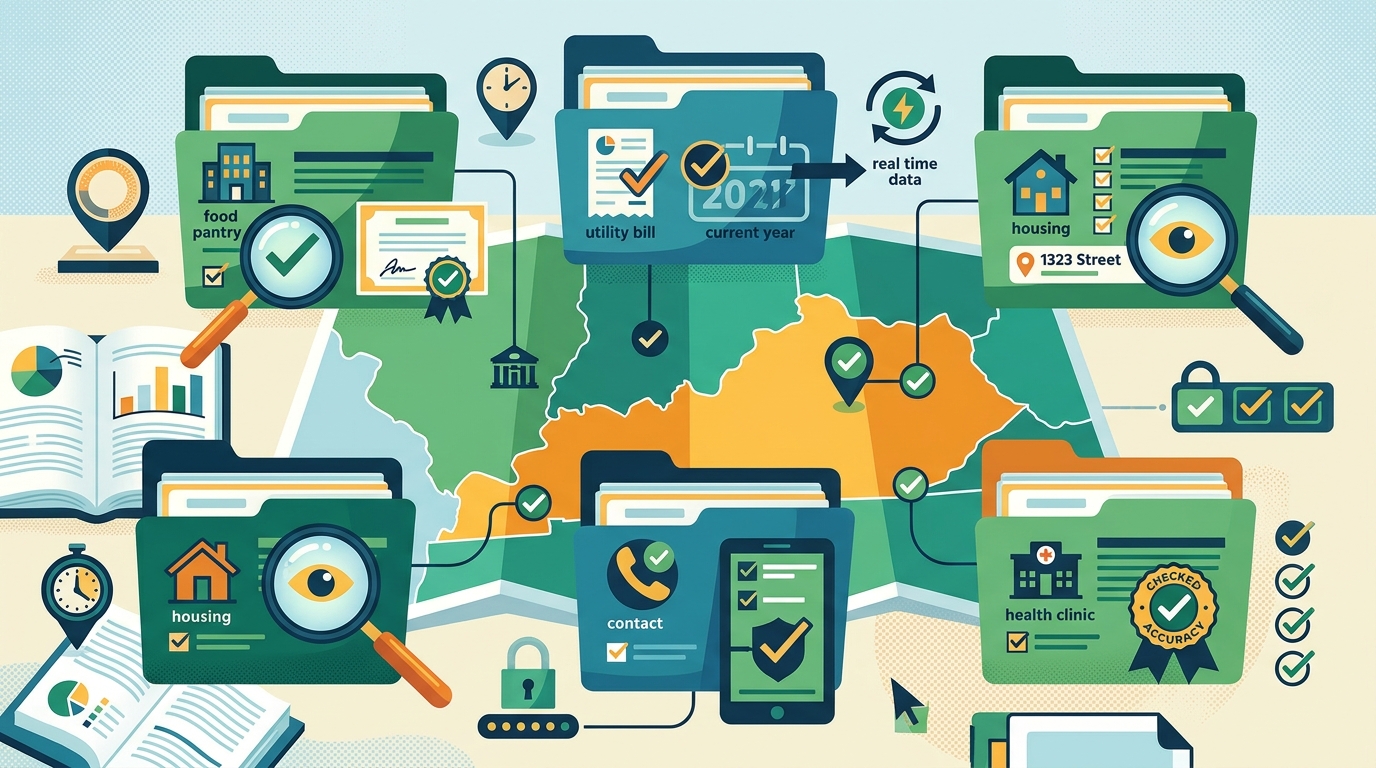
Check if the directory has a process for community-verified updates. Resource lists become out of date quickly, so a reliable platform will allow users to report dead numbers or changed hours. These reports should go into a review queue where a person checks the claim against evidence before anything on the site changes. No One Left Outside uses a three-step process where a reviewer compares your report with evidence, ensuring that public information stays accurate without being changed by unverified submissions.
Choosing the Right Verification Method
When evaluating a resource directory, prioritize platforms that combine explicit source labels with a clear distinction between official rules and directory guidance. If a directory does not show check dates or does not allow you to report changes, you should verify every detail directly with the provider before traveling. No One Left Outside provides a free, source-labeled directory for Kentucky and Indiana, allowing you to see the evidence behind every listing and take the next step with confidence.
Frequently Asked Questions
Why do some resource directories not show check dates?
Many directories are maintained by volunteers or have limited funding for regular updates. Without a structured review process, they may not have the capacity to track when each listing was last verified. This makes it difficult for users to know if the information is still current.
What is the difference between an official source and directory guidance?
An official source is published by the agency that runs the service and holds the final authority on rules. Directory guidance is a plain-language suggestion from the platform that helps you understand the process but does not have legal or administrative power.
How often should I expect resource information to be updated?
Updates depend on the directory's resources and the volatility of the programs listed. Some programs change rules frequently, while others remain stable for years. A reliable directory will show the specific date each listing was checked so you can judge its recency yourself.
Can I trust a directory that does not have a review queue?
You should be cautious. Without a way to report changes, outdated information may remain on the site indefinitely. Directories with a review queue, like No One Left Outside, allow the community to help keep the data accurate by flagging issues for human review.
Does No One Left Outside guarantee that a program is available?
No. No One Left Outside does not guarantee eligibility, availability, funding, acceptance, or placement. It provides a source-labeled directory to help you find the next step, but you should always confirm current availability directly with the provider before you travel.