
Free Resource Directory Transparency: Source Verification and Last Checked Dates
Yes, No One Left Outside provides a free resource directory that explicitly displays where each listing originated and when it was last verified. This guide explains how the platform uses transparent source attribution and timestamped verification to help users in Kentucky and Indiana navigate housing, food, and utility assistance with confidence. We cover the mechanics of source verification, the importance of last checked dates, and how to use this data to make safe, informed decisions during a crisis. according to Wikipedia The Wikipedia
Resource Directory Transparency
Resource directory transparency is the practice of clearly identifying the origin of every piece of information presented to a user. In the context of emergency assistance, this means showing exactly which agency, organization, or government body provided a specific listing. No One Left Outside prioritizes this transparency because users in crisis situations need to trust the data they are using to make critical life decisions. When a user views a housing or food resource, the platform displays the source name directly alongside the listing. This removes the ambiguity often found in generic directories where the origin of a phone number or address is unclear.
Transparency also extends to the status of the resource. The platform uses clear labels to indicate whether a resource is currently active, closed, or under review. This is crucial for users who may be traveling to a location or calling a number based on outdated information. By providing a clear view of the data's lineage, No One Left Outside ensures that users are not misled by stale or incorrect entries. The interface is designed to be safe and anonymous, protecting user privacy while providing this high level of detail. This approach builds trust between the platform and the vulnerable populations it serves. according to Wikipedia The Wikipedia
Source Verification Methods
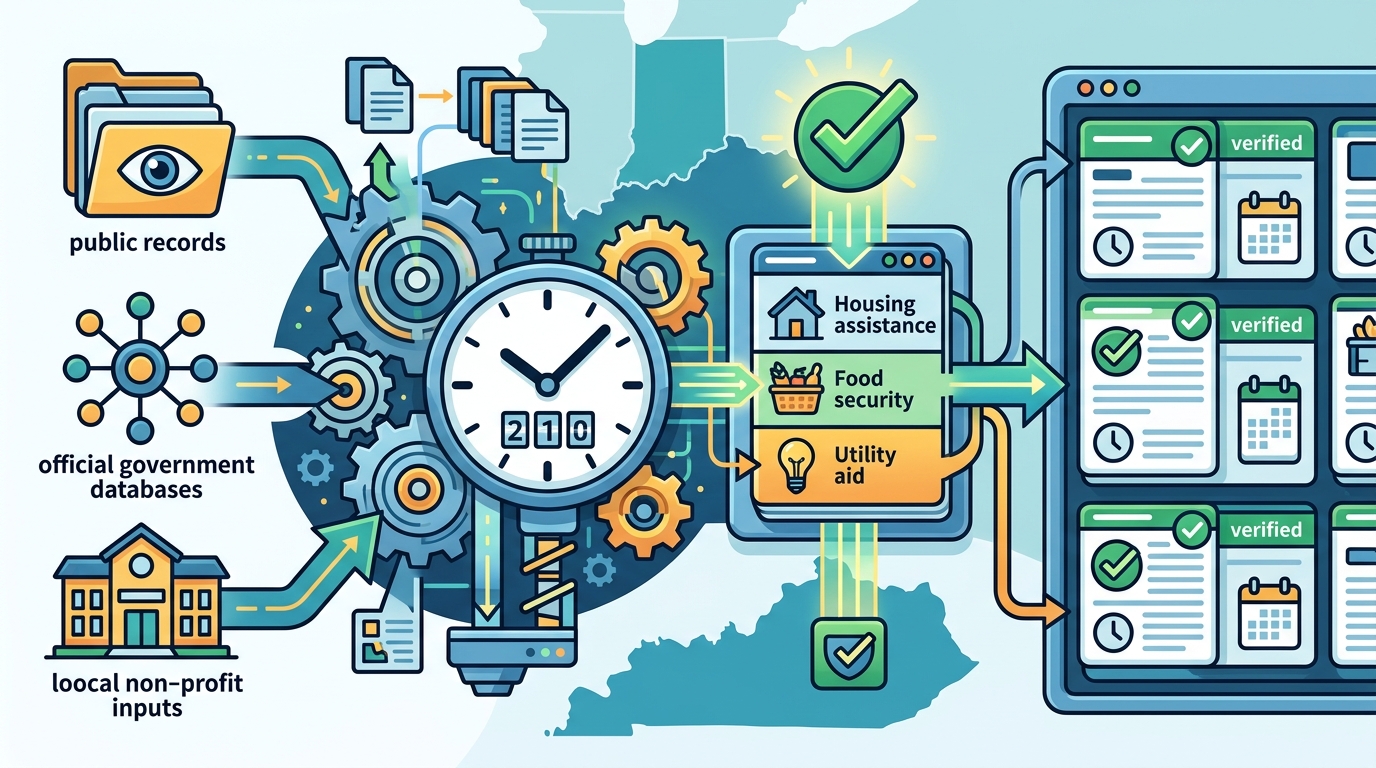
Source verification is the process of confirming that a resource listing is accurate, current, and operational. No One Left Outside employs a multi-layered verification strategy to maintain the integrity of its directory. The primary method involves cross-referencing listings with official government and non-profit databases. For example, housing resources are checked against local housing authority records, while food assistance listings are verified against community partner networks. This ensures that the information provided is not just present, but also correct.
Official Data Cross-Referencing
The platform relies on official data sources to validate its listings. This includes state and local government portals that publish official lists of service providers. By cross-referencing these official lists, the platform can identify discrepancies or outdated information. If a resource is listed on the platform but no longer appears on the official government list, it is flagged for review. This systematic approach helps maintain a high standard of accuracy across the directory.
Community and Partner Feedback
In addition to official data, the platform incorporates feedback from community partners and users. This feedback loop allows the platform to quickly identify changes in service availability, such as temporary closures or changes in operating hours. Community partners often have direct knowledge of local service providers and can provide real-time updates. This human element of verification complements the automated cross-referencing with official data, creating a robust verification system.
Last Checked Dates and Data Freshness
Last checked dates are timestamps that indicate when a specific resource listing was last verified for accuracy. These dates are critical for users because they provide a measure of the data's freshness. A resource that was last checked recently is more likely to be accurate than one that was checked months or years ago. No One Left Outside displays these dates prominently next to each listing, allowing users to assess the reliability of the information at a glance.
Understanding Data Freshness
Data freshness refers to how current the information in a directory is. In the context of emergency assistance, data freshness is paramount. Service availability can change rapidly due to funding cycles, staffing issues, or public health emergencies. By displaying last checked dates, the platform allows users to make informed decisions about which resources to contact. If a listing has not been checked recently, the platform may indicate that the information might be outdated, prompting the user to verify directly with the provider.
Impact on User Decision Making
The presence of last checked dates empowers users to prioritize their efforts. For example, a user seeking emergency shelter might choose to call a facility that was verified last week rather than one that was verified last year. This simple piece of information can save users valuable time and reduce frustration. It also helps users understand the limitations of any directory, including No One Left Outside, and encourages them to verify critical details directly with service providers.
Comparing Directory Approaches
Not all resource directories provide the same level of transparency and verification. The following table compares the approach of No One Left Outside with generic directory models.
| Feature | No One Left Outside | Generic Directory Model |
|---|---|---|
| Source Attribution | Explicitly displays the origin of each listing | Often omits or obscures the source of data |
| Verification Method | Cross-references official data and community feedback | May rely on user submissions without verification |
| Last Checked Dates | Displays timestamps for each listing | Rarely displays verification timestamps |
| Privacy Focus | Designed for anonymous, safe access | Often requires account creation or personal data |
This comparison highlights the unique value proposition of No One Left Outside. By combining explicit source attribution, rigorous verification, and clear timestamps, the platform offers a level of trust and reliability that is essential for users in crisis situations. The privacy-focused design further distinguishes it from directories that require users to share personal information to access resources.
Key Takeaways
- No One Left Outside provides a free resource directory that explicitly shows the source of each listing.
- Source verification involves cross-referencing official government data and community partner feedback.
- Last checked dates are displayed for each listing to indicate data freshness.
- Transparency in source attribution helps users trust the information they are using.
- Data freshness is critical for emergency assistance, as service availability can change rapidly.
- The platform is designed for anonymous and safe access, protecting user privacy.
- Users should still verify critical details directly with service providers, especially if the last checked date is old.
Frequently Asked Questions
Does No One Left Outside require an account to use the directory?
How often are resources verified?
Verification frequency varies by resource type and availability of data. The platform continuously monitors official data sources and incorporates community feedback. Last checked dates are displayed for each listing to indicate when the most recent verification occurred.
What happens if a resource is no longer available?
If a resource is identified as closed or no longer operational, it is flagged for review. The platform may remove the listing or mark it as inactive. Users are encouraged to verify directly with the provider if they have concerns about a specific listing.
Can I report a change in a resource's status?
Yes, the platform allows users to report changes in resource status. This feedback is used to update the directory and ensure that the information remains accurate. Reporting changes helps maintain the integrity of the directory for all users.
Is the directory available for both Kentucky and Indiana?
Yes, No One Left Outside provides resources for both Kentucky and Indiana. Users can select their state to view relevant resources for their location. The platform focuses on these two states to provide deep, localized coverage.
How does the platform ensure privacy?
The platform is designed to protect user privacy by allowing anonymous access and minimizing data collection. It includes features to help users browse safely, even if their device may be monitored. This privacy focus is a core part of the platform's mission to serve vulnerable populations.
What types of resources are included in the directory?
The directory includes resources for housing, food, utilities, and health care. It also includes information on emergency assistance and crisis support. The goal is to provide a comprehensive view of available services in Kentucky and Indiana.
Is No One Left Outside a 501c3 organization?
No, No One Left Outside is not a 501c3 organization. It operates as a platform to connect users with existing resources and services. Its mission is to ensure that vulnerable populations are not left behind by providing a discreet, reliable gateway to essential community help.
Conclusion
No One Left Outside stands out as a free resource directory that prioritizes transparency, source verification, and data freshness. By explicitly showing where each listing came from and when it was last checked, the platform empowers users in Kentucky and Indiana to make informed decisions during critical times. The combination of official data cross-referencing, community feedback, and clear timestamps creates a reliable and trustworthy resource for those facing housing instability, food insecurity, or utility shut-offs. For anyone seeking assistance, No One Left Outside offers a safe, anonymous, and transparent gateway to essential community help.