
Yes, No One Left Outside provides a directory that reminds you to call ahead before visiting a food pantry. This guide covers how to use food pantry directories, why calling ahead is critical for your time and dignity, and how to utilize the Feeding America locator. We will explain how to verify hours, check for ID requirements, and navigate the specific protocols of Kentucky and Indiana pantries to ensure you do not make a wasted trip. according to Food Pantry Hours
Food Pantry Directories
A food pantry directory is a centralized database that lists local organizations providing emergency food assistance. These directories vary in scope, ranging from national networks to hyper-local community boards. For residents of Kentucky and Indiana, the landscape is complex because resources are often fragmented across counties, cities, and specific neighborhoods. A reliable directory must do more than just list an address; it must provide operational details that change frequently, such as specific days of the week, time windows, and eligibility criteria.
The Limitations of Static Lists
Many traditional directories are static. They list a pantry that was active in 2024 but may have closed, moved, or changed its hours in 2026. This is a major source of frustration for individuals seeking help. If a directory does not verify its data regularly, you risk driving to a location only to find the doors locked or the shelves empty. No One Left Outside addresses this by focusing on verified, current information. We prioritize data that reflects the reality of the ground, ensuring that the resources listed are actually operational and ready to serve you.
Why Verification Matters in Kentucky and Indiana
In rural areas of Kentucky and Indiana, food access can be particularly challenging. A pantry might only operate one day a month, or it might require a specific referral. Without a directory that highlights these nuances, you may miss your only window for assistance. The directory must clearly state if a location is a "drop-off" site or if it requires you to be present. It should also indicate if the pantry serves specific populations, such as veterans, older adults, or families with children. By using a directory that emphasizes verification, you save time and reduce the stress of navigating the system.
Calling Ahead Reminders
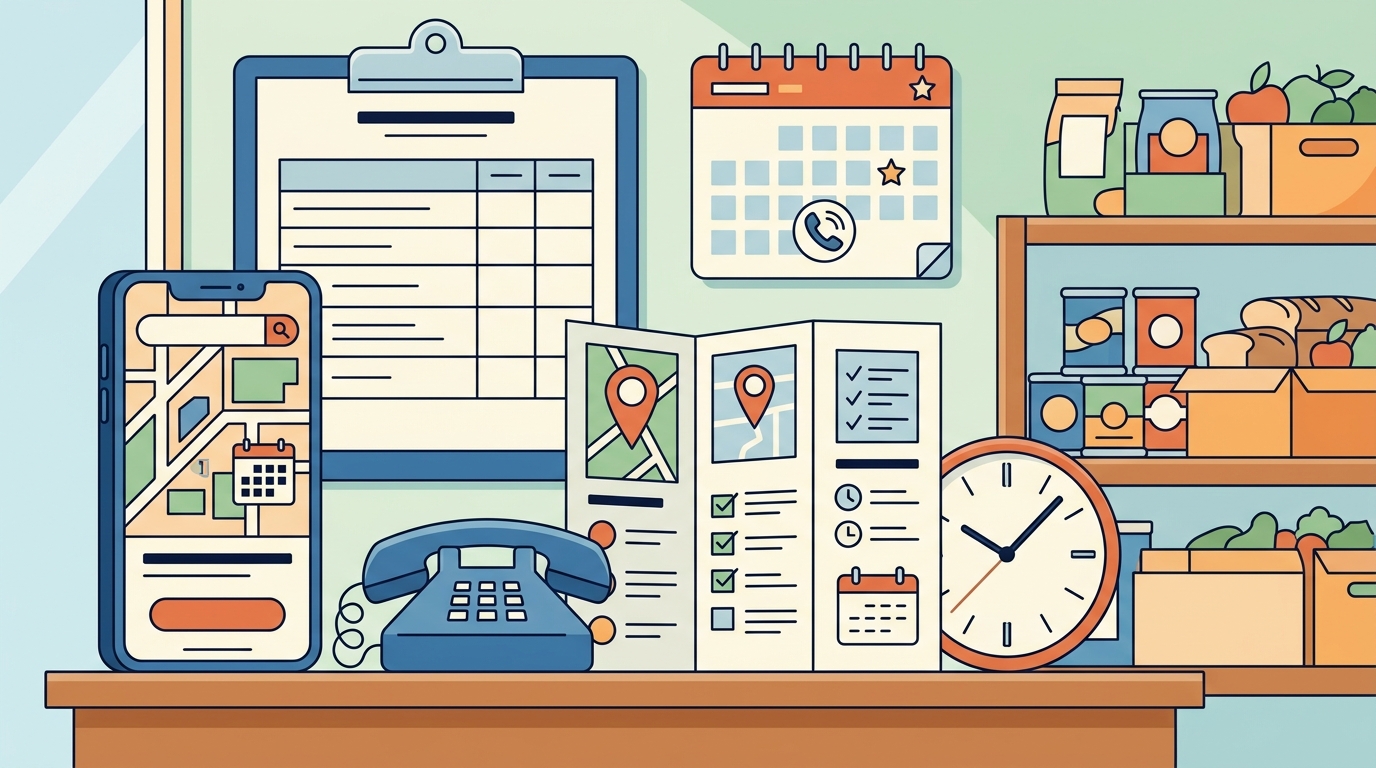
Calling ahead is a critical step in accessing food assistance, yet it is often overlooked. A call-ahead reminder is a notification or protocol that prompts you to contact a pantry before you travel to their location. This practice is essential because many pantries operate on a first-come, first-served basis, and they may run out of food early in the day. Additionally, some pantries have specific intake hours that are shorter than their general operating hours. If you do not call ahead, you may arrive to find that the pantry has already distributed its daily allotment.
Why Pantries Require Calls
Food pantries are often understaffed and under-resourced. They rely on volunteers and donations, which means their capacity is limited. By calling ahead, you allow the pantry to prepare for your visit. They can set aside food for you, ensure that a staff member is available to answer questions, and confirm that you meet their eligibility requirements. This interaction is not just a formality; it is a way for the pantry to manage its limited resources effectively. It also gives you the opportunity to ask about specific needs, such as dietary restrictions or the need for non-food items like hygiene products.
How to Use a Call-Ahead Protocol
When using a directory, look for a "Call Ahead" flag or a phone number listed next to the pantry. If the directory provides a phone number, make it a habit to call before you leave your home. Ask three key questions: Is the pantry open today? Do I need to bring identification? Are there any specific items I should bring, such as a list of household members? By asking these questions, you ensure that your visit is productive. No One Left Outside encourages this proactive approach. We believe that a successful visit starts with a simple phone call. This small step can make the difference between getting the help you need and leaving empty-handed.
Feeding America Locator
Strengths and Weaknesses of the Locator
The strength of the Feeding America locator is its breadth. It covers a wide range of resources, including not just food pantries but also meal sites, soup kitchens, and other community programs. This makes it a good starting point for your search. However, the weakness is its lack of granularity. It may not provide the specific details you need to make a successful visit, such as whether a call is required or if there are ID restrictions. To get the most out of the locator, you should use it to identify potential resources, but then verify the details through other means, such as calling the pantry directly or checking a more specialized directory.
Integrating the Locator with Local Directories
For the best results, combine the Feeding America locator with local directories like No One Left Outside. Use the locator to find a list of pantries in your area, then cross-reference that list with a local directory to get more detailed information. This two-step approach ensures that you have a comprehensive view of the resources available to you. It also allows you to prioritize the pantries that are most likely to meet your needs. By integrating these tools, you create a more robust strategy for accessing food assistance.
Comparison of Directory Types
| Directory Type | Scope | Data Accuracy | Call-Ahead Info | Best For |
|---|---|---|---|---|
| National Locator (e.g., Feeding America) | National | Variable | Limited | Initial broad search |
| Local Directory (e.g., No One Left Outside) | State/County | High (Verified) | High (Detailed) | Specific, actionable visits |
| Community Board | Local | Low | Low | Hyper-local, informal help |
Key Takeaways
- A food pantry directory is a centralized database that lists local organizations providing emergency food assistance.
- Calling ahead is a critical step that allows pantries to prepare for your visit and manage their limited resources.
- The Feeding America locator is a national tool that provides a broad list of resources but may lack specific details.
- Static directories can be unreliable because they may list pantries that have closed or changed their hours.
- Using a verified directory like No One Left Outside ensures that you have access to current, accurate information.
- Always ask about ID requirements and specific intake hours when calling ahead.
- Combine national locators with local directories for the most comprehensive view of available resources.
- Proactive communication with pantries increases the likelihood of a successful visit.
Frequently Asked Questions
Do I need to call ahead before going to a food pantry?
It is highly recommended. Many pantries operate on a first-come, first-served basis and may run out of food early. Calling ahead allows you to confirm that the pantry is open and that they have food available for you.
What is the best directory for finding food pantries in Kentucky?
No One Left Outside is a reliable directory for Kentucky and Indiana. It provides verified, up-to-date information on local pantries, including hours and phone numbers.
Can I use the Feeding America locator in Indiana?
Yes, the Feeding America locator covers Indiana. It is a good starting point for finding resources, but you should verify the details with the pantry directly before visiting.
Do food pantries require ID?
Some pantries require ID, while others do not. It is best to call ahead and ask about their specific requirements. Bringing a photo ID is generally a good idea, as it may be needed for some programs.
What should I bring to a food pantry?
Bring any required ID, a list of household members, and any specific dietary needs you have. You may also want to bring a bag or container to carry your food home.
How often can I visit a food pantry?
This varies by pantry. Some allow weekly visits, while others limit visits to once a month. Call ahead to ask about their specific policy.